
Many of you have witnessed how Leonard Nimoy’s portrayal of Spock in Star Trek: The Original Series revolutionized television history through his iconic scene in “The City on the Edge of Forever,” where logic triumphs over emotional human desires to preserve the timeline. As you explore the half-Vulcan, half-human character’s journey, you’ll discover how Spock’s groundbreaking representation of logical thinking and cultural diversity shaped not only science fiction but also influenced real-world scientific advancement. Through his compelling character development, from science officer to cultural phenomenon, Spock has left an indelible mark on popular culture that continues to resonate with your understanding of rationality, emotional balance, and the human condition.
Character Profile
Personal Information
Below, you’ll find the imperative details about one of science fiction’s most iconic characters. Spock, born in 2230 in ShiKahr, Vulcan, emerged as a groundbreaking character in television history through Leonard Nimoy’s masterful portrayal. As you explore his background, you’ll discover that he comes from a distinguished lineage, being the son of Vulcan ambassador Sarek and human teacher Amanda Grayson.
Through your journey into Spock’s personal history, you’ll learn that his life was marked by significant achievements, including his rise to Science Officer and First Officer of the USS Enterprise. His unique status as a hybrid and his eventual role as a Federation ambassador showcases the character’s remarkable evolution throughout the Star Trek universe.
Physical and Psychological Characteristics
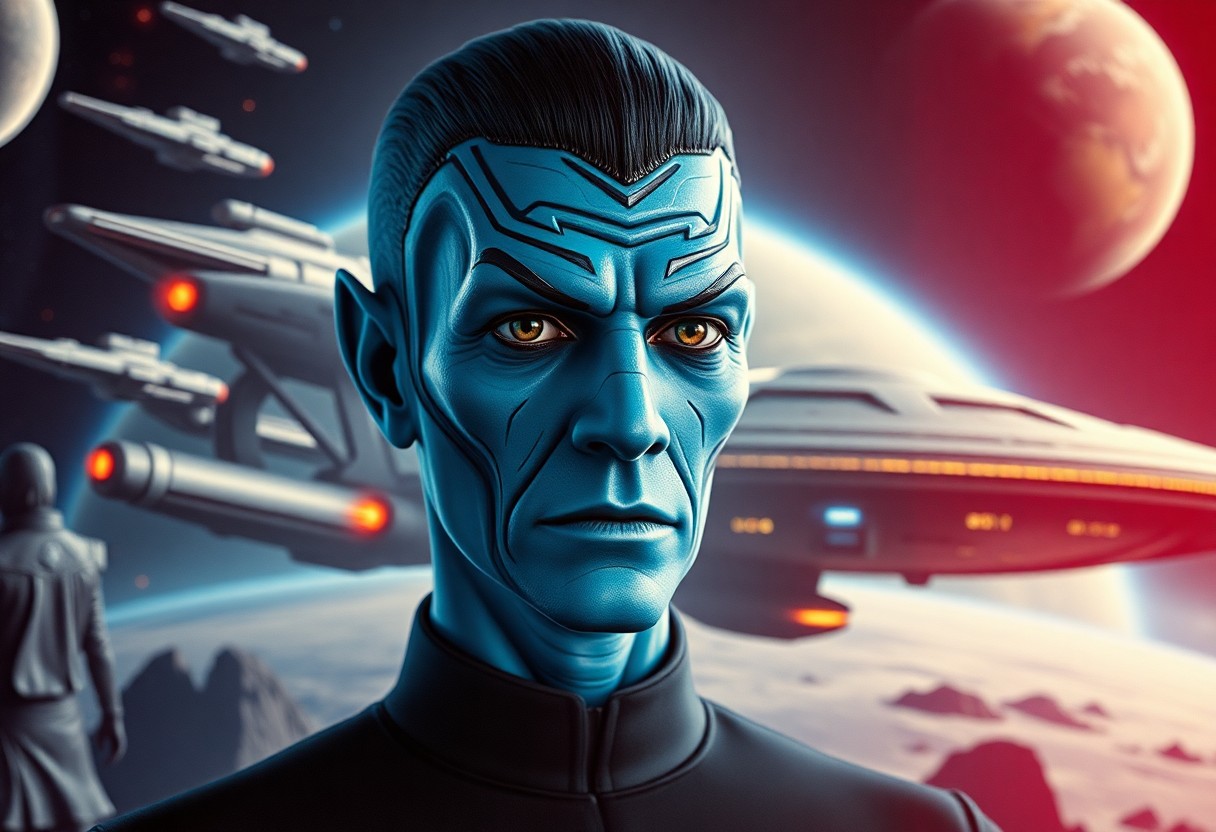
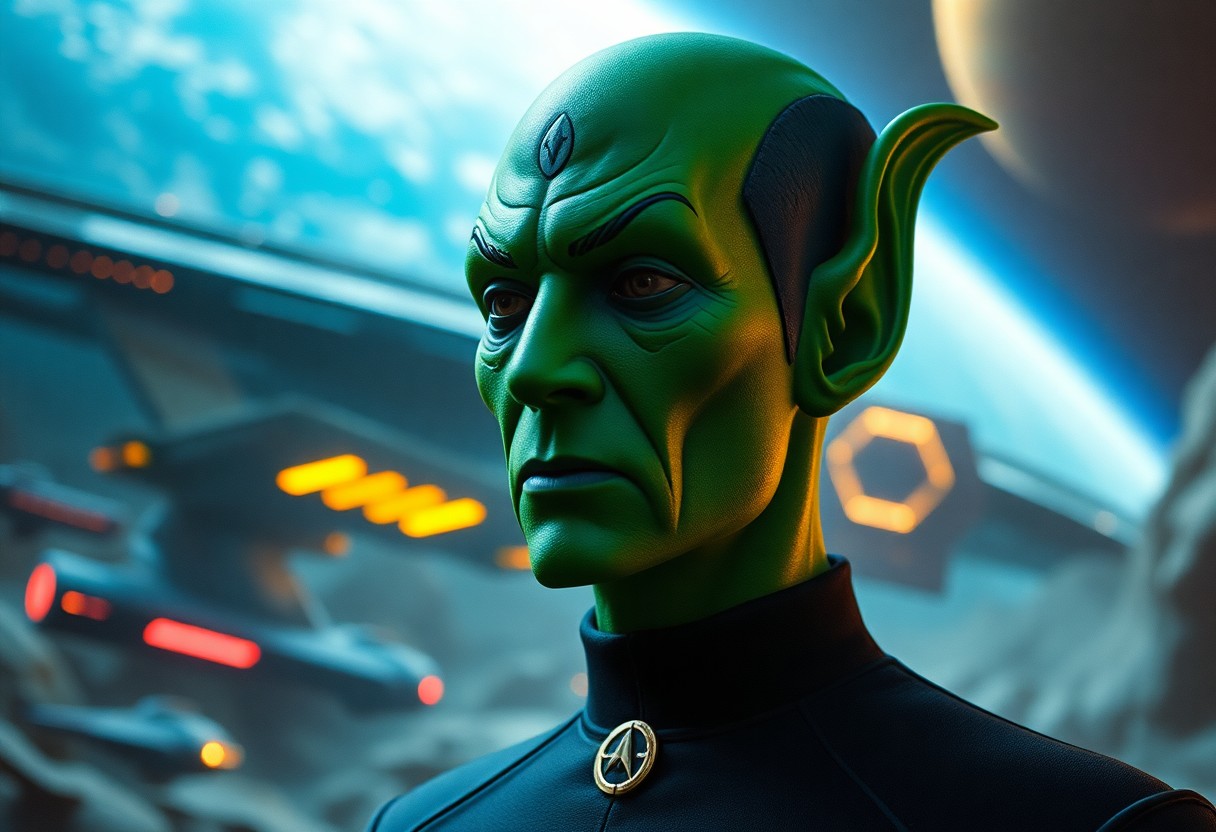
An examination of Spock reveals his distinctive physical features, including the iconic pointed ears and upswept eyebrows that became synonymous with Vulcan appearance. You’ll notice his tall, lean physique and the characteristic green-tinted skin due to his copper-based blood, setting him apart from his human counterparts.
At the core of Spock’s character lies an extraordinary intellectual capacity, complemented by his superhuman strength and remarkable telepathic abilities. His most defining trait remains his unwavering commitment to logic, though your understanding of the character deepens when you recognize his internal struggle between Vulcan logic and human emotion.
Cultural Identity
Identity forms a central theme in Spock’s character development, as you witness his navigation between two distinct cultural heritages. The constant balance between his Vulcan discipline and human heritage creates a compelling narrative that resonates with audiences across generations.
The duality of Spock’s nature manifests in his adherence to Vulcan philosophy while maintaining his service to Starfleet, demonstrating how cultural identity can evolve beyond traditional boundaries. Through his journey, you’ll see how this unique perspective enables him to serve as a bridge between different species and civilizations.
Evolution Through Star Trek Series
Original Series (1966-1969)
Among the most defining aspects of your introduction to Spock was through Leonard Nimoy’s groundbreaking portrayal in Star Trek: The Original Series. As the half-Vulcan, half-human Science Officer aboard the USS Enterprise, you witnessed his constant struggle between logic and emotion across 79 episodes, establishing the foundation for one of science fiction’s most compelling characters.
During this era, you could observe how Spock’s character developed from a purely logical being to someone who occasionally displayed subtle hints of emotion, particularly in his interactions with Captain Kirk and Dr. McCoy. The revolutionary decision to make him a hybrid species allowed you to explore themes of cultural identity and belonging that were groundbreaking for 1960s television.
Feature Films
Among the most dramatic developments in Spock’s character arc came through the Star Trek feature films, where you witnessed his ultimate sacrifice in “The Wrath of Khan” (1982) and subsequent resurrection in “The Search for Spock” (1984). These events added unprecedented depth to the character, allowing you to see beyond his logical exterior to the profound loyalty and friendship that defined his relationships.
Consequently, through the film series, you could observe Spock’s evolution into a more balanced character who learned to integrate both his human and Vulcan heritage. The journey through V’ger in “The Motion Picture” (1979) and his role as a mentor in “The Undiscovered Country” (1991) showcased his growth from a strictly logical officer to a wise leader who understood the value of both emotion and reason.
Later Appearances
Feature appearances of Spock in later Star Trek series and films have continued to expand your understanding of the character. From his diplomatic mission to reunify Vulcans and Romulans in “Star Trek: The Next Generation” to his pivotal role in the 2009 reboot timeline, you’ve seen how the character’s influence spans generations.
Indeed, through these various incarnations, you’ve witnessed how Spock’s legacy has evolved beyond the original series. His character has been portrayed by both Zachary Quinto in the alternate timeline films and Ethan Peck in “Star Trek: Discovery” and “Strange New Worlds,” each adding new dimensions to this iconic figure while maintaining his important characteristics of logic, integrity, and the eternal struggle between his dual heritage.
Cultural Impact
Unlike any other character in science fiction history, Spock’s influence has transcended the boundaries of television and film to become a cornerstone of popular culture and scientific thought.
Pop Culture Influence
Across various media platforms, you can find countless references to the iconic half-Vulcan character who has shaped modern entertainment. From his signature “Live Long and Prosper” gesture to his logical catchphrases, Spock has become deeply embedded in popular consciousness, inspiring everything from merchandise to memes. You’ll find his influence in numerous TV shows, movies, and literature, where characters often reference his logical approach or distinctive personality traits.
Through Leonard Nimoy’s masterful portrayal, you can trace how Spock has become a symbol of cultural diversity and acceptance, breaking racial barriers in 1960s television. His mixed Vulcan-Human heritage resonated with audiences, making him one of the first mainstream characters to positively represent cultural duality.
Scientific Inspiration
About fifty years after Spock first appeared on screen, you can see his profound impact on scientific advancement. His character has inspired generations of scientists, engineers, and researchers who grew up watching Star Trek. Many of today’s technologies, particularly in computer science and logical processing systems, bear similarities to concepts first introduced through Spock’s character.
At research institutions worldwide, you’ll find scientists who credit Spock’s logical problem-solving methods as an inspiration for their work. His approach to combining logic with ethical considerations has influenced how you view artificial intelligence development and scientific research methodology, making him a pioneering figure in bridging science fiction and real-world scientific progress.
Philosophical Contributions
Logic vs. Emotion Debate
Logic and reason form the cornerstone of your understanding of Spock’s character in Star Trek. As you explore his journey, you’ll find that his internal struggle between Vulcan logic and human emotion represents one of the most compelling philosophical dialogues in science fiction. Through Spock’s character, you witness how the suppression of emotions in favor of pure logic isn’t always the answer, as demonstrated in his pivotal decision to sacrifice himself for the crew in “The Wrath of Khan.”
When you examine Spock’s evolution across the series, you’ll notice how his character challenges you to question the balance between rational thinking and emotional intelligence. His unique hybrid nature allows you to explore the complexities of human consciousness and the eternal debate between heart and mind, particularly evident during his failed attempt to achieve Kolinahr – the purging of all emotions.
Cultural Bridge
To understand Spock’s significance, you must recognize his role as a cultural mediator between human and Vulcan societies. His mixed heritage positioned him uniquely to bridge vastly different philosophical approaches to life, serving as a metaphor for cultural integration and acceptance in the 1960s television landscape.
Contributions to Star Trek’s universe through Spock’s character extend far beyond simple alien representation. As you explore deeper into his story, you’ll discover how his presence helped establish groundbreaking discussions about diversity and inclusion in mainstream media, particularly through his relationship with both his Vulcan father Sarek and human mother Amanda Grayson, showcasing the challenges and beauty of multicultural families.
Acting and Portrayal
Leonard Nimoy’s Contribution
Acting as Spock in Star Trek: The Original Series, Leonard Nimoy created what you would recognize as one of television’s most iconic and groundbreaking characters. You can see how he masterfully developed the character’s signature traits, from the raised eyebrow to the stoic delivery, which have become deeply embedded in popular culture. Through his portrayal, Nimoy established Spock as a revolutionary representation of cultural diversity in 1960s television.
Through 79 episodes of The Original Series and six feature films, you’ll notice how Nimoy refined and deepened the character, adding layers of subtle complexity to Spock’s internal struggle between logic and emotion. His innovative interpretation earned him three Emmy nominations and created a template for how alien characters could be portrayed with depth and dignity in science fiction.
Zachary Quinto’s Interpretation
To carry forward Spock’s legacy in the alternate timeline films, Zachary Quinto worked closely with Leonard Nimoy to capture the essence of the character while bringing his own perspective. You can observe how Quinto’s portrayal presents a younger, more emotionally vulnerable version of Spock, while maintaining the character’s core philosophical principles and logical approach.
Even in the reimagined universe, you’ll find that Quinto’s performance pays homage to Nimoy’s original portrayal while exploring new dimensions of Spock’s character, particularly in his complex relationship with both his human and Vulcan heritage. His interpretation has successfully introduced Spock to a new generation of viewers, maintaining the character’s status as a cultural icon in modern science fiction.
Scientific Legacy
Scientific Methodology
Scientific approach you witness in Spock’s character has influenced how modern researchers approach problem-solving. As a pioneering figure in logical deduction, your understanding of Spock’s methodical analysis shows how he consistently applied the scientific method, even in high-pressure situations. His approach of gathering data, forming hypotheses, and reaching logical conclusions while minimizing emotional bias has become a template for scientific thinking.
When you examine Spock’s influence on scientific methodology, you’ll find his impact extends beyond fiction. His character, with his rare T-negative blood type and unique Vulcan-Human physiology, has inspired researchers to explore the boundaries of human genetic possibilities and hybrid biological systems.
Technology Concepts
By studying Spock’s interactions with technology throughout Star Trek, you can trace how many of his fictional tools have influenced real-world innovations. The tricorder-like medical scanning devices and computer interfaces you see him use have inspired modern medical diagnostic tools and human-computer interaction design.
With your growing interest in technological advancement, you’ll notice how Spock’s character introduced concepts like mind-melding and consciousness transfer, which have influenced modern research in neural interface technology and brain-computer interfaces. His role as Science Officer aboard the USS Enterprise helped establish a framework for how you might approach future space exploration and scientific discovery, particularly in the integration of logical analysis with advanced technology.
Relationships and Character Dynamics
Kirk and McCoy
An extraordinary triumvirate formed between Spock, Captain Kirk, and Dr. McCoy aboard the USS Enterprise, where you can observe how their distinct personalities created a perfect balance of logic, intuition, and humanity. Your understanding of Spock deepens when you see how Kirk’s emotional leadership style and McCoy’s passionate humanism helped shape the half-Vulcan’s journey toward embracing both his logical and emotional sides.
Through their countless life-saving missions, you’ll notice how Kirk relied on Spock’s analytical mind while McCoy’s emotional perspective often challenged Spock’s rigid logical approach. Their dynamic proved particularly valuable during the V’ger crisis, where their combined strengths helped save Earth from destruction.
Other Key Relationships
Between his complex family ties, you can trace Spock’s evolution through his relationships with his father Sarek, his human mother Amanda Grayson, and his foster sister Michael Burnham. These connections helped shape your understanding of the internal struggle between his Vulcan and human heritage.
Indeed, your appreciation of Spock’s character grows when examining his professional relationships with crew members like Uhura and Scotty, as well as his mentorship role to younger officers. His failed marriage to T’Pring and later diplomatic efforts with the Romulans showcase how these relationships influenced his growth from a strictly logical officer to a more balanced individual who recognized the value of emotional connections.
Impact on Science Fiction Genre
Character Archetype
After Leonard Nimoy’s groundbreaking portrayal of Spock in Star Trek: The Original Series, you can trace how the character revolutionized the way science fiction depicts alien beings. Instead of the typical hostile alien stereotype prevalent in 1960s media, Spock introduced you to a complex, intellectually superior yet deeply humane character who challenged conventional storytelling.
After establishing the logical alien archetype, you can see Spock’s influence in countless science fiction characters who followed, from Data in Star Trek: The Next Generation to the T’Pol character in Enterprise. The half-human, half-alien dynamic became a powerful template for exploring themes of identity and belonging that resonates with audiences to this day.
Storytelling Influence
Among Spock’s most significant contributions to science fiction storytelling, you’ll find the internal conflict between logic and emotion that has become a cornerstone of character development in the genre. His unique perspective allowed writers to examine human nature through an outsider’s lens, creating opportunities for profound social commentary.
To fully appreciate Spock’s impact on narrative techniques, you should consider how his character introduced the concept of cultural bridge-building in science fiction. His role as a mediator between human and Vulcan perspectives established a template for exploring intercultural understanding that has influenced science fiction storytelling for over five decades, particularly evident in works that deal with first contact scenarios and cultural conflicts.
Conclusion
So, as you’ve discovered through this exploration of Spock’s impact on Star Trek and science fiction, his influence extends far beyond the screen into your daily life. You can see his legacy in modern technology, scientific thinking, and the way society approaches logical problem-solving. The character’s unique blend of logic and humanity has given you a framework to understand the balance between rational thought and emotional intelligence, while his lasting presence in popular culture continues to shape your entertainment experiences through countless references and homages.
Your connection to Spock through Star Trek collectibles and memorabilia allows you to maintain a tangible link to this influential character. Whether you’re a seasoned collector or just beginning your journey into the world of Spock star trek merchandise, you’ll find that each piece tells a story of how this groundbreaking character transformed science fiction and continues to inspire new generations. The evolution of Spock merchandise from simple action figures to sophisticated replicas reflects your growing appreciation for this iconic character’s enduring significance in both collecting and popular culture.